
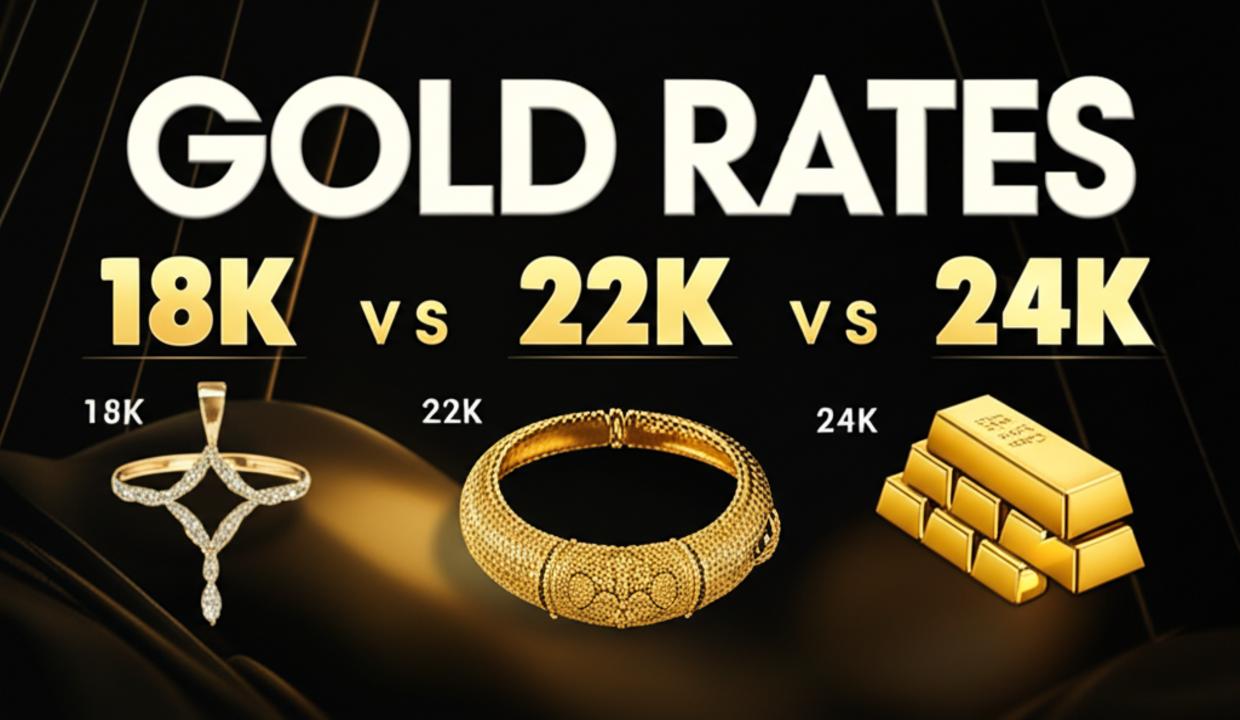
Welcome to Expert Guide, your ultimate resource for navigating the shimmering world of gold jewellery. When it comes to investing in or simply adorning yourself with this timeless metal, understanding the nuances of gold purity is absolutely essential. Whether you are eyeing a delicate chain, a robust bracelet, or an intricate pendant, the karat value significantly impacts its price, durability, and appearance.
This comprehensive guide will demystify the differences between 18K gold, 22K gold, and 24K gold, helping you make an informed decision that perfectly suits your needs and budget. We will delve into what each karat signifies, how it affects the gold rates, and which type is ideal for various applications. Let us embark on this golden journey together!
Understanding Gold Purity and Its Impact on Jewellery Rates
Gold’s purity is measured in karats (K), with 24K representing the purest form. This measurement indicates the proportion of pure gold in an alloy. The higher the karat number, the greater the percentage of pure gold and, consequently, the higher its value. However, pure gold is inherently soft, making it less practical for everyday wear without being mixed with other metals.
The addition of alloy metals like copper, silver, or zinc enhances gold’s strength and durability, while also influencing its color. This alloying process is crucial for creating jewellery that can withstand the rigors of daily life. Understanding these distinctions is fundamental to grasping the variations in gold rates across different karat values.
The Purest Form: 24K Gold
24K gold is the pinnacle of purity, boasting 99.9% to 99.99% pure gold content. It showcases the brightest, most vibrant yellow hue imaginable, a testament to its unadulterated nature. Naturally, this supreme purity makes 24K gold the most expensive option per gram or ounce, with an approximate price of $107.75 per gram or $3347 per ounce at a given spot rate.
However, its softness is a significant characteristic. Being exceptionally malleable, 24K gold is highly prone to scratches, dents, and deformation. This inherent softness limits its practical application in conventional jewellery that requires structural integrity. Instead, its primary uses lean towards investment vehicles and specific ceremonial purposes.
- Purity: 99.9% – 99.99% pure gold.
- Color: Brightest, deepest yellow.
- Durability: Extremely soft and easily damaged.
- Primary Use: Gold bullion, investment coins, bars, and certain traditional ceremonial jewellery that isn’t worn frequently.
The Traditional Favourite: 22K Gold
22K gold is often considered the gold standard for traditional jewellery, particularly in many parts of Asia. It contains approximately 91.6% to 91.7% pure gold, with the remaining percentage composed of alloy metals. This blend strikes a beautiful balance, offering a rich yellow color that closely resembles 24K gold, yet with enhanced durability.
While still relatively soft compared to lower karat options, 22K gold is significantly more resilient than its 24K counterpart. Its price is proportionately lower than 24K gold, typically around 91.6% of the current spot rate. For instance, if the spot gold price is $3347.16 per ounce, 22K gold would be approximately $3066 per ounce.
- Purity: Approximately 91.6% – 91.7% pure gold.
- Color: Rich, deep yellow.
- Durability: Softer than 18K, but wearable for traditional jewellery.
- Primary Use: Widely used for traditional necklaces, bangles, earrings, and other culturally significant pieces.
The Practical Pick: 18K Gold
For those seeking a blend of aesthetic appeal, durability, and value, 18K gold presents an excellent choice. It consists of 75% pure gold and 25% alloy metals. This higher proportion of alloys makes 18K gold considerably harder and more resistant to scratches and dents compared to 22K or 24K gold.
The increased durability makes 18K gold ideal for fine jewellery designed for daily wear, including engagement rings, watches, and intricate designer pieces. While its color is a more subtle yellow due to the higher alloy content, it can also be alloyed to produce white gold or rose gold, offering greater versatility in design. Its price reflects its purity, being around 75% of the 24K gold’s spot rate, roughly $2510 per ounce at a $3347.16 spot price.
- Purity: 75% pure gold.
- Color: More subtle yellow; also available in white or rose gold.
- Durability: Harder and more durable, excellent for daily wear.
- Primary Use: Fine jewellery, engagement rings, watches, and pieces requiring high durability.
How Gold Jewellery Rates Are Calculated
Understanding how gold jewellery rates are determined goes beyond just the purity of the metal. While the karat value is the most significant factor, several other elements contribute to the final retail price. The base calculation for the gold’s intrinsic value is straightforward, based on the current spot price of pure gold.
The formula to estimate the base price of gold based on its purity is:
Price = (Karat / 24) × Spot Gold Price
For example, with a spot gold price of $3347.16 per ounce (approximately $107.75 per gram):
- 22K gold = (22/24) × $3347.16 ≈ $3066 per ounce
- 18K gold = (18/24) × $3347.16 ≈ $2510 per ounce
However, the price you pay at a jewellery store will include additional costs beyond the pure gold value. These often encompass “making charges” or “wastage charges,” which account for the craftsmanship, labor, and loss during the manufacturing process. Furthermore, Goods and Services Tax (GST) or other applicable taxes, along with the complexity and uniqueness of the design, will increase the final retail price.
You can find helpful tools online to estimate jewellery prices based on purity and current market rates. Always ask your jeweler for a clear breakdown of these charges when making a purchase.
Gold Purity Comparison: 18K vs 22K vs 24K
Choosing the right karat involves weighing purity against practicality. While 24K gold offers unmatched purity, its softness limits its use. 22K gold is a great compromise for traditional jewellery, providing a rich look with improved durability. 18K gold prioritizes strength and is versatile for modern designs.
Here is a concise summary to help you differentiate between these popular gold karats:
| Karat | Purity (%) | Price Approx. (per oz at $3347 spot) | Color | Durability | Use Case |
|---|---|---|---|---|---|
| 24K | 99.9-99.99 | $3347 | Bright Yellow | Very soft | Bullion, investment, ceremonial |
| 22K | 91.6-91.7 | $3066 | Rich Yellow | Soft but wearable | Traditional jewelry |
| 18K | 75 | $2510 | Subtle Yellow | Harder, durable | Fine jewelry, daily wear |
Choosing the Right Karat for Your Jewellery
The best gold karat for you depends entirely on your priorities. If investment and maximum purity are your goals, 24K gold in the form of bars or coins is the clear choice. For traditional, intricately designed pieces that carry cultural significance, 22K gold remains a popular and beautiful option, balancing richness with wearability.
However, if you are looking for jewellery that can withstand the rigors of everyday life, such as an engagement ring or a daily wear necklace, 18K gold is highly recommended. Its superior durability ensures longevity and resistance to common wear and tear. It also offers more versatility in terms of color options, including stunning white gold or rose gold.
Consider your lifestyle, how often you plan to wear the jewellery, and your budget. Remember that jewellery made with lower karat gold might be less expensive upfront but offers greater practical benefits for regular use. For a deeper dive into the differences, you can read more about what distinguishes these gold types.
Pros and Cons of Different Gold Karats
Each karat level offers distinct advantages and disadvantages. Understanding these can further guide your purchasing decision, ensuring your gold jewellery aligns with your expectations regarding investment value, aesthetics, and practicality.
| Pros | Cons |
|---|---|
| 24K Gold: Highest purity, maximum investment value, brightest natural gold color. | 24K Gold: Very soft, prone to damage, not practical for most jewellery, highest price. |
| 22K Gold: High purity, rich yellow color, good for traditional designs, relatively good value retention. | 22K Gold: Still relatively soft, susceptible to bending/scratching, less durable than 18K. |
| 18K Gold: Excellent durability, ideal for daily wear, wide range of designs, versatile color options (white, rose), more affordable. | 18K Gold: Lower gold content means less intrinsic value per weight, subtle yellow color might not appeal to those seeking vibrant gold. |
Comparing Investment Potential
When considering gold, many people also think about its investment potential. While 24K gold in bullion form is the preferred investment vehicle due to its purity and ease of valuation, jewellery is a different category. Jewellery includes making charges and design value, which are not typically recovered when selling for scrap gold. The intrinsic value of the gold itself will always be highest for 24K, followed by 22K, and then 18K, proportionate to their gold content.
However, the best investment in terms of wearability and long-term enjoyment might be 18K gold for functional pieces. For a comprehensive comparison across a wider range of karats and their investment implications, exploring resources like gold price comparisons can be beneficial. Ultimately, your choice depends on whether you prioritize liquid investment or wearable art.
Watch More in This Video
For a visual explanation and further insights into how purity affects price and wearability, check out this informative video. It concisely highlights the practical considerations for each gold karat, including why 18K gold is often more practical for daily use, while 22K gold remains a traditional favorite, and 24K gold is predominantly for investment and ceremonial purposes. This recent insight from 2025 reinforces many of the points discussed in this article, providing a modern perspective on gold rates and choices. #GoldJewellery
(Note: Please replace “your_video_id_here” with the actual YouTube video ID.)
Frequently Asked Questions (FAQ)
-
What is the primary difference between 18K, 22K, and 24K gold?
The main difference lies in their purity. 24K gold is 99.9% pure. 22K gold contains 91.6% pure gold, and 18K gold has 75% pure gold. The remaining percentage in 22K and 18K is alloy metals, which influence durability, color, and price. This directly impacts their respective gold rates.
-
Which gold is best for daily wear jewellery?
18K gold is generally considered the best for daily wear jewellery. Its 75% pure gold content mixed with 25% alloy metals makes it significantly more durable and resistant to scratches and dents than 22K or 24K gold, ensuring your pieces last longer and maintain their beauty.
-
Is 24K gold always more expensive than 22K and 18K gold?
Yes, per unit of weight (gram or ounce), 24K gold is always the most expensive because it is the purest form of gold. The price of 22K gold is approximately 91.6% of 24K, and 18K gold is about 75% of 24K gold’s spot price, reflecting their lower gold content.
-
Can 22K gold be used for engagement rings?
While 22K gold is used for some traditional rings, it is generally softer than 18K gold. For engagement rings, which are often worn daily and can be exposed to more wear and tear, 18K gold is usually recommended due to its superior durability. This helps protect valuable gemstones and the ring’s intricate design.
-
Do making charges vary based on gold karat?
Making charges are typically based on the complexity of the design and the weight of the jewellery, not directly on the gold karat. However, more intricate designs often require harder alloys (like those in 18K gold), which might influence the manufacturing process. Always inquire about the making charges separately from the gold rate.
-
Where can I find more information about different gold karats?
For more detailed insights into various gold karats, including 10K, 14K, 18K, 22K, and 24K, you can explore resources like comprehensive gold comparisons which explain their characteristics and suitable uses in jewellery.
Conclusion
Navigating the world of gold jewellery can seem complex, but by understanding the core differences between 18K gold, 22K gold, and 24K gold, you are now equipped to make truly informed decisions. Each karat offers a unique combination of purity, price, color, and durability, catering to different needs and preferences.
Whether your priority is investment-grade purity, traditional elegance, or everyday durability, there is a perfect gold karat for you. Always consider the intended use of the jewellery and your lifestyle before making a purchase. Remember that the overall gold rates you pay include more than just the metal’s value; craftsmanship and design play significant roles.
We hope this guide has illuminated the intricate beauty and practical considerations of gold. Feel free to share your thoughts, comment below, or explore our About Us page to learn more about Expert Guide. If you have any further questions or specific inquiries, do not hesitate to Contact us. Your journey into the radiant world of gold jewellery starts with knowledge!
Disclaimer: All images and videos are sourced from public platforms like Google and YouTube. If any content belongs to you and you want credit or removal, please inform us via our contact page.